
REVIEW · WADI TIWI, BANI AWF & THE HIDDEN WADIS
Salalah: Wadi Darbat, Jabal Samhan, Baobab, Mirbat Sand Dune
Salalah’s east side feels like a different planet. This guided route strings together Wadi Darbat and towering Jabal Samhan with culture stops in Taqa and a few seriously oddball nature sights like a massive sinkhole.
What I like most is how you get real variety without feeling rushed. You get classic coastal views from the Taqa cliff area and then a proper nature day with waterfalls in the Khareef season, plus the rare baobabs in Wadi Hinna.
One thing to plan for: the wow factor depends on season. Waterfalls are seasonal during Khareef, so in drier months you may see less water than the romantic photos promise, even though the wadi itself stays worth visiting.
In This Review
- Key highlights to watch for
- Why East Salalah is worth a whole day
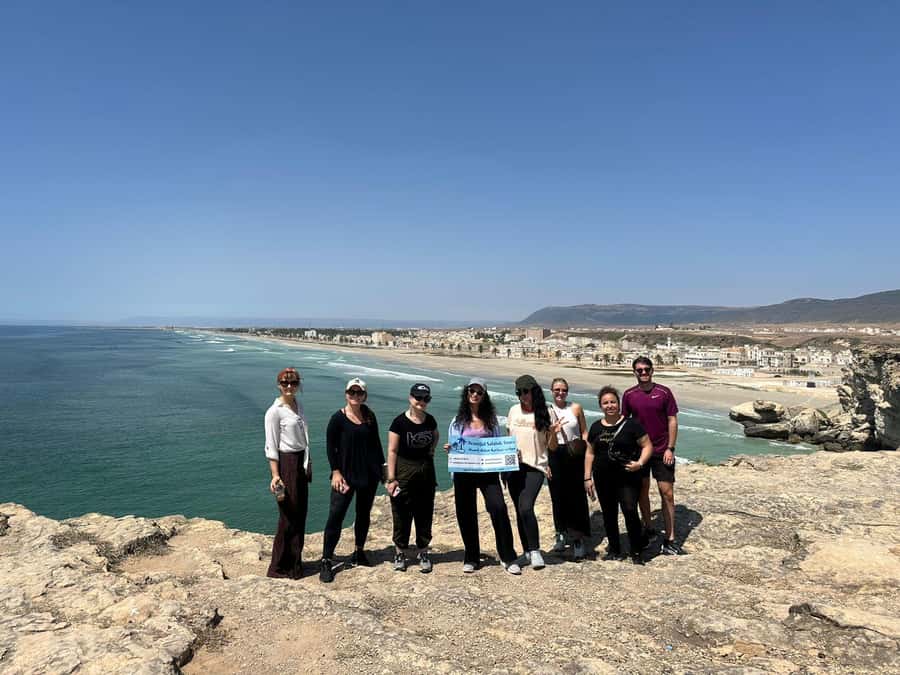
- Starting in Taqa: fishing village views and 19th-century stops
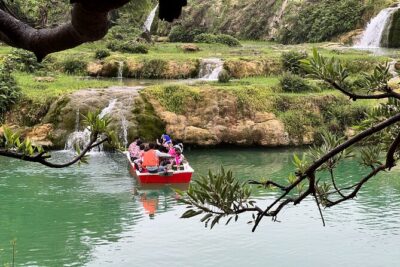
- Wadi Darbat: seasonal waterfalls, canals, and optional boat rides
- Tawi Attair sinkhole: Birds Well and a big WOW moment
- Jabal Samhan: standing above the clouds at 4,000 feet
- Wadi Hinna baobabs and Gravity Hill: the fun, odd stops
- Mirbat sand dunes: coast and mountains in one frame
- Tour length and timing: what a 4 to 8 hour day really means
- Price value at $76: why it costs what it costs
- Guides and on-the-ground quality: what to expect from the human side
- What to bring and how to dress in Dhofar
- Who this trip suits best
- Should you book this East Salalah route?
- FAQ
- How long is this Salalah east-side trip?
- What’s included in the price?
- Are entrance tickets included for Taqa Castle, Burj Al Askar, or Koofan House?
- Is lunch included?
- Can I kayak or boat at Wadi Darbat?
- When are the waterfalls in Wadi Darbat likely to be best?
- What should I wear and bring?
- Is the tour suitable for everyone?
- What languages are offered for the guide?
Key highlights to watch for
- Wadi Darbat’s camels and optional boat time near the seasonal greenery
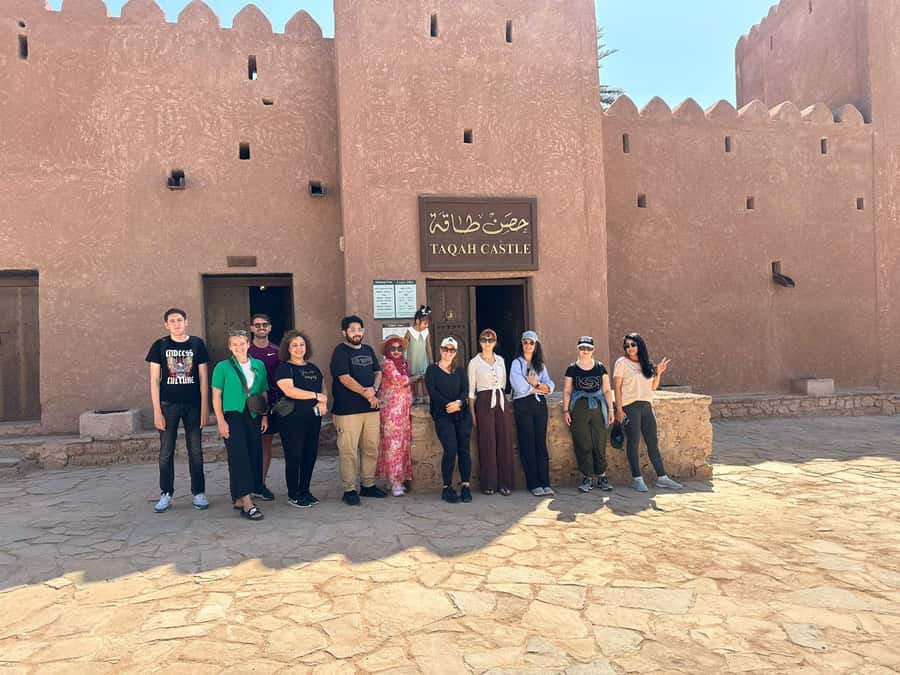
- Taqa’s cliff-top lookouts and easy culture stops like Taqa Castle and Koofan House
- Tawi Attair sinkhole (Birds Well) as a dramatic, photo-friendly stop
- Jabal Samhan, 4,000 feet above the clouds for big sky-and-cliff views
- Baobabs in Wadi Hinna and a fun detour to Gravity Hill
- Mirbat sand dunes with the coast and mountains in the same frame
Why East Salalah is worth a whole day
East Salalah is where the region stops feeling like a beach town and starts feeling like a set of competing worlds. You move from sea and fishing villages to steep cliffs, then into wadis, sinkholes, and mountain lookouts that can hit 4,000 feet above the clouds.
I especially like that this tour isn’t just “drive past scenery.” It gives you actual pause points: view from the cliff, time at the sites, and time at the key natural stops. That matters in Salalah, because distances are real and the best light comes fast.
Starting in Taqa: fishing village views and 19th-century stops
Your day kicks off with hotel pickup around Salalah or Hawana Salalah, with additional pickup/drop-off options that can include Mirbat and Taqah. Then you head toward Taqa, a traditional fishing town where you can see day-to-day life and spot birdlife along the shore.
From there, the tour leans into viewpoints and heritage. The Taqa Castle area is a main stop, and you can also choose to visit Koofan Heritage House or Burj Al Askar (the cliff-top lookout) if you want tickets. If you do not want to pay for entries, you can still enjoy seeing the landmarks from outside, which keeps the experience flexible.
Two practical reasons this part works:
1) You get coastal views early, when the lighting is often kinder for photos.
2) The cultural sites give context for how people shaped and lived in Dhofar, not just where they built.
Wadi Darbat: seasonal waterfalls, canals, and optional boat rides
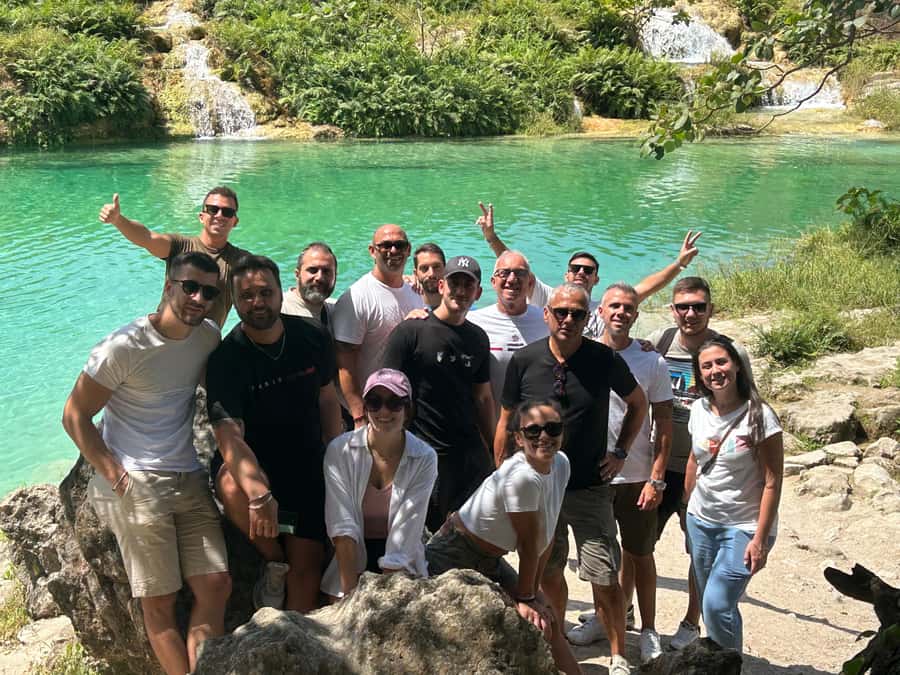
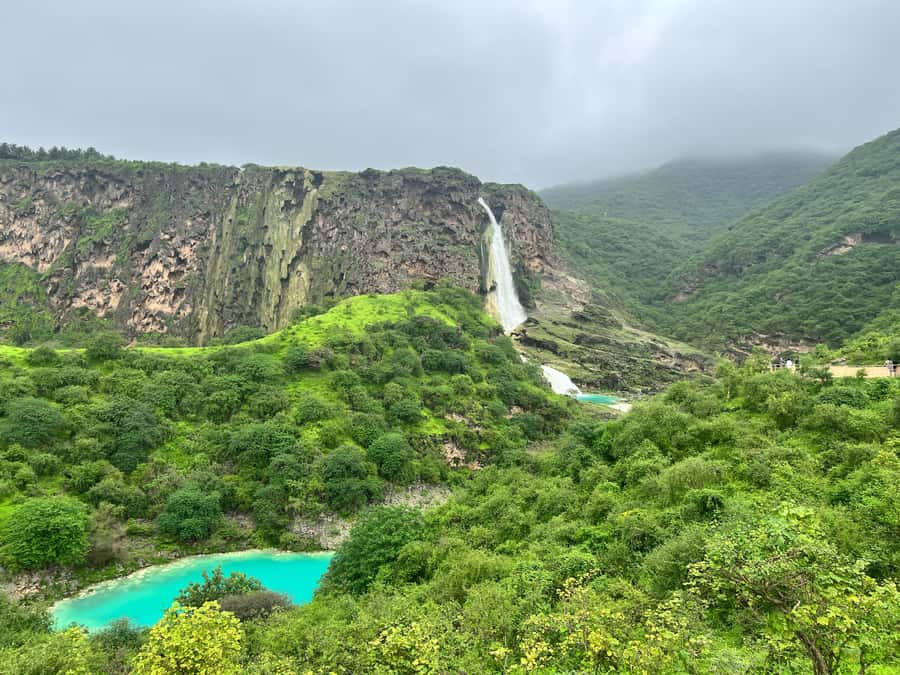
Next comes the big nature hit: Wadi Darbat. This is the most famous valley in the region, and it’s the reason a lot of people plan their Salalah trip around Khareef. When the monsoon season is active, the water, greenery, and general atmosphere feel completely different than the dry months.
Here’s the detail that makes this wadi more fun than a simple walk:
- You can choose an optional boat cruise or kayaking time on the canal.
- You might even spot wandering camels cooling off in the water while you’re there.
Even when the waterfalls are less dramatic, the wadi remains a high-value stop because it’s a whole mini system of greenery, water features, and wildlife activity. I’d think of it as your “reset button” in the middle of the day, especially if you’re building a route that includes tall cliffs afterward.
Tawi Attair sinkhole: Birds Well and a big WOW moment
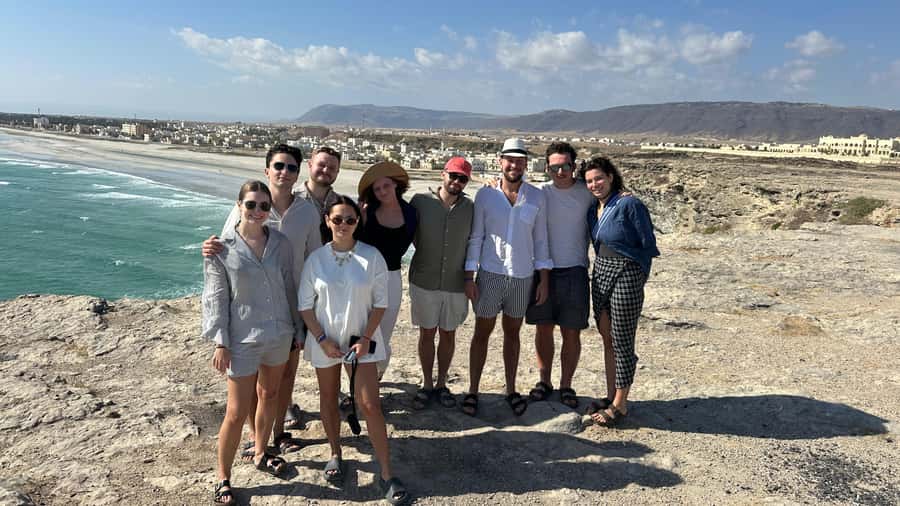
Before the mountain portion, the tour pauses at Tawi Attair, also known locally as Birds Well. This sinkhole is one of those places that makes you look twice, because the scale is hard to estimate until you’re standing close to it.
This stop is not about a long activity. It’s about the shock factor of the structure, plus the photos. The time you get here is short enough that you will not lose momentum, but long enough to reorient your brain from waterfall mode to cliff-and-rock mode.
If you’re the type who likes “quick, powerful photo stops,” this is a strong one.
Jabal Samhan: standing above the clouds at 4,000 feet

In the full-day version, you head up to Jabal Samhan, the highest point in Southern Oman. The big promise here is altitude, because you’re literally seeing cloud layers roll against the cliff edges from around 4,000 feet.
This is where you learn why people chase weather in Salalah. When conditions are right, the view feels like being at the edge of the sky. When it’s misty, the place still feels unreal, just in a softer way. Either way, it’s the most dramatic “vertical” moment on the whole route.
A note for planning: if clouds roll in early, your time can feel like a gentle pause for breathing and looking, not walking. Come with patience and expect that light and visibility might change minute to minute.
Wadi Hinna baobabs and Gravity Hill: the fun, odd stops
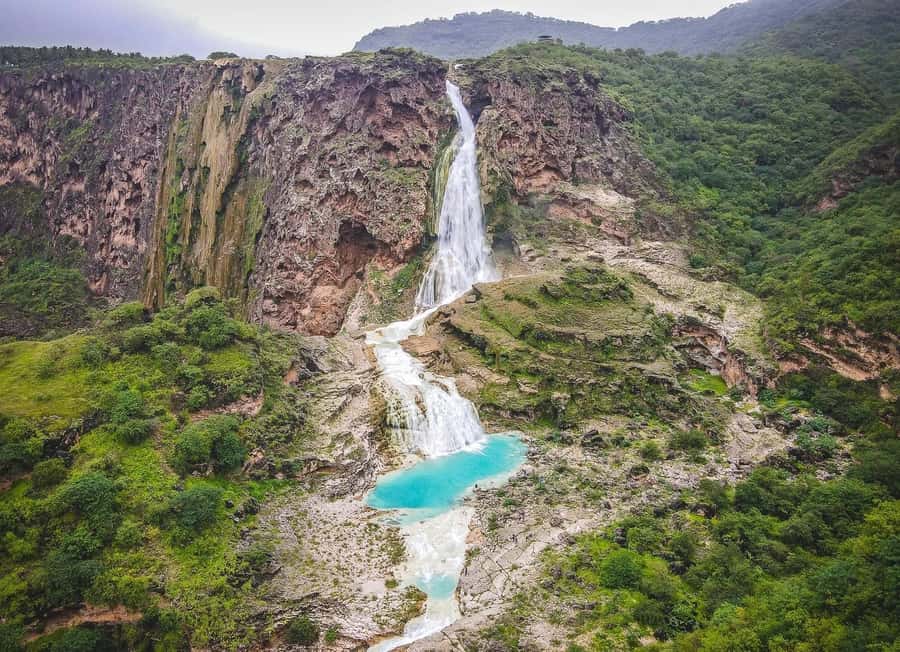
One of the most memorable parts of the longer day is Wadi Hinna, where you’ll see baobab trees. Baobabs are not common in this region, so even short viewing time can feel special because you get that contrast of a tree that looks like it belongs in a different continent.
Then the day gets playful with Gravity Hill Salalah. This is the well-known optical illusion where you watch the vehicle appear to roll uphill when placed in neutral. It’s the kind of stop you either love because it’s silly and surprising, or enjoy because it breaks up the serious scenery.
In both cases, the value is not just the sight. It’s the change of pace. After cliffs and wadis, these stops feel like a cultural tradition of “take a moment and have fun with the weird.”
Mirbat sand dunes: coast and mountains in one frame
To close the day, the full-day route continues to the Ad Damar Dunes in Mirbat. This is your transition from rock and water to sand and sky. You’ll get golden dunes with the mountain backdrop, and because Mirbat is a coastal area, you also get that sense of the shoreline sitting nearby.
This ending works well for two reasons:
- Light near the end of the day often makes sand look warmer and more textured.
- You get a final sweeping view to take home, not just another “stop and go” moment.
If you’re choosing between half-day and full-day, I’d seriously consider full-day for this finish, because it’s the most visually different ending on the trip.
Tour length and timing: what a 4 to 8 hour day really means
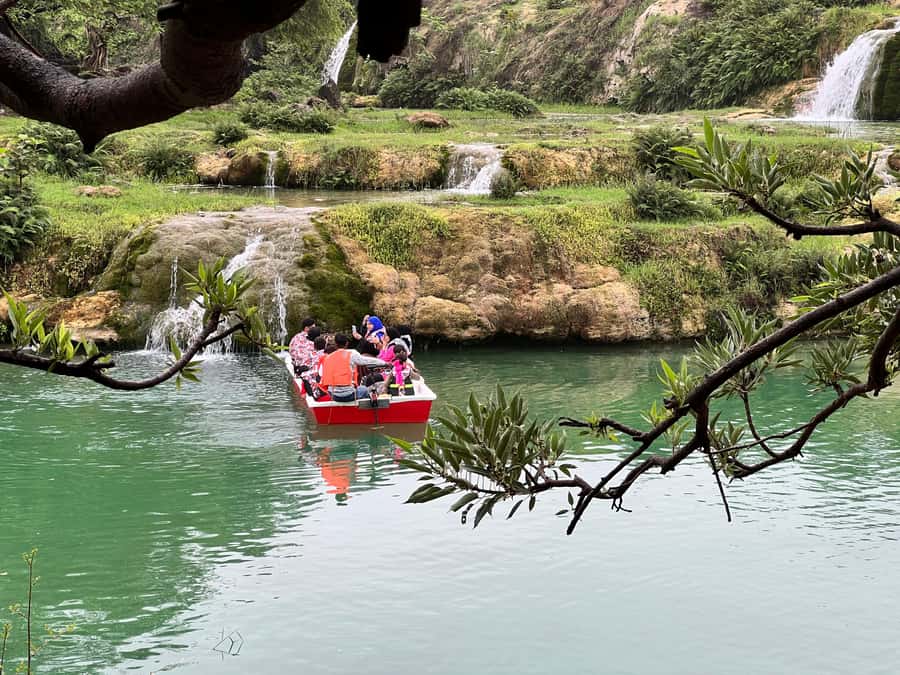
This experience runs about 4 to 8 hours, depending on whether you book the half-day or full-day version and how your season shapes the stops. The drive times between areas are built in, and each site gets a real chunk of time, not just a photo dash.
Here’s the practical reality to keep in mind:
- You will be in a jeep or SUV, and you will be on your feet some of the time.
- Some areas involve uneven ground or short walks.
- If you get stuck on optional activities like the boat or other on-site extras, the day can stretch.
I like that the route is paced so you can enjoy it even if you are not an intense hiker.
Price value at $76: why it costs what it costs
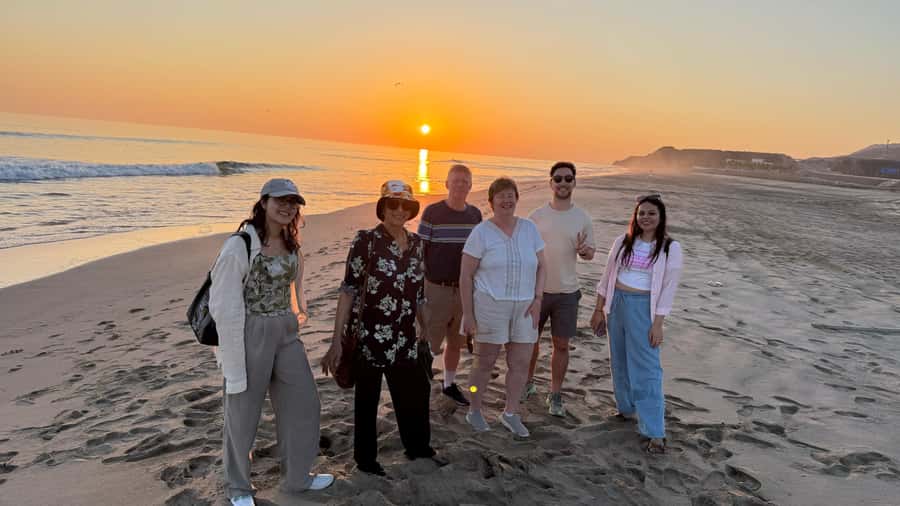
At $76 per person, this is priced like a guided “out of town” day in Salalah. What you’re paying for is not just a driver. You’re paying for:
- A guide who ties together culture and geography
- Transport between multiple far-apart sites
- Several meaningful stops that each need separate travel time
- Bottled water included
Food is extra, and optional entries at Taqa Castle and Koofan House are not included. Optional boating and kayaking at Wadi Darbat are also extra. Still, it’s good value if you want one organized day that hits the core East Salalah highlights without needing to rent a car and figure out the timing yourself.
If you’re visiting only a short time and you want maximum variety, this price starts making sense fast.
Guides and on-the-ground quality: what to expect from the human side
The guide quality seems to be a major strength of this operator. Names that come up again and again include Adil, Adel, Mohammad Ali, Tariq, Ibrahim, and Salim. People describe them as friendly, history-minded, and willing to adjust photo stops so you can actually get the shot you came for.
You’ll also notice a pattern: good guiding here is not just facts. It’s timing, gentle pacing, and helping you notice what’s easy to miss, like the best angles at Taqa cliff points or how to make the most of limited time during misty conditions on Jabal Samhan.
One thing I’d keep in mind: your guide can shape your day a lot. If you’re someone who wants a strict schedule, tell them at pickup that you want clear timing.
What to bring and how to dress in Dhofar
This trip is outdoor-heavy, and conditions in Salalah can change by time of day. Pack comfortable shoes, and if you have them, bring hiking shoes for grip. Bring a bit of cash for small purchases at stops, and a credit card can help if something requires it.
Dress is a real requirement. For the Omani modest dress code, plan on covering knees and shoulders. Avoid mini-skirts, shorts, and sleeveless or deep-neck outfits.
Also eat breakfast before you start. Lunch is not included, and there’s no “perfect restaurant” built into the middle of the route. You might be able to grab something during the wadi or around the Samhan area, but plan to be flexible and bring snacks if you like.
Who this trip suits best
This is ideal if you want:
- A guided mix of nature plus heritage in one day
- Big views at Jabal Samhan
- A proper stop at Wadi Darbat
- Fun detours like Gravity Hill and the baobabs at Wadi Hinna
It’s less ideal if you:
- Need step-free access, because the route is not designed for mobility impairments
- Are very sensitive to uneven ground and walking time
- Are pregnant, or in the very elderly age range (the tour is not suitable for people over 95)
Should you book this East Salalah route?
If your goal is to see what makes Salalah different from other Oman beach stops, I think this tour is a smart choice. The combination of Taqa coastal heritage, Wadi Darbat, Jabal Samhan cloud cliffs, and the quirky add-ons (sinkhole, baobabs, Gravity Hill, Mirbat dunes) is exactly what makes one organized day feel worth it.
I’d book it with one season-based expectation adjustment. If you’re traveling when Khareef is not active, you may get less waterfall action at Wadi Darbat. Still, the wadi itself, the viewpoints, and the cloud-cliff payoff at Jabal Samhan can keep the day exciting.
FAQ
How long is this Salalah east-side trip?
It runs about 4 to 8 hours, depending on the starting time and whether you book the half-day or full-day version.
What’s included in the price?
You get a tour guide, pickup and drop-off from your hotel in Salalah and Hawana Salalah, and bottled water.
Are entrance tickets included for Taqa Castle, Burj Al Askar, or Koofan House?
No. Entrance tickets are optional, and you can also view these landmarks from the outside.
Is lunch included?
Food is not included. Lunch is available at an additional cost, and there may not be a good restaurant option during the natural-site focused parts of the tour.
Can I kayak or boat at Wadi Darbat?
Boat rides and kayaking are optional, and they are not included in the base price.
When are the waterfalls in Wadi Darbat likely to be best?
Waterfalls and the full greenery are seasonal during Khareef. The wadi itself is a beautiful destination year-round.
What should I wear and bring?
Wear modest clothing that covers knees and shoulders. Bring comfortable shoes, and if you have them, hiking shoes. You may also want cash and a credit card.
Is the tour suitable for everyone?
No. It is not suitable for people with mobility impairments, pregnant women, or people over 95 years old.
What languages are offered for the guide?
The guide is available in English, Polish, Italian, German, and Arabic.
Wadi Tiwi, Bani Awf & the Hidden Wadis, compared.
 ★ 5.0East Salalah Mountain Safari, Wadi Darbat, Beach, Camels, DunesFrom $45206 reviews
 ★ 4.9Salalah: Half-Day Guided Tour to Wadi Darbat & Mount SamhanFrom $11046 reviews
 ★ 5.0Wahiba Sands Desert and Wadi Hawar Private TourFrom $18731 reviews
 ★ 5.0Full-Day Bimmah Sinkhole and Wadi Al Arbeieen TourFrom $17528 reviews
 ★ 4.9From Muscat: Self-Drive ATV Adventure in Wadi Al RakFrom $15528 reviews
 ★ 5.0Wadi Al Arbeieen Sinkhole & Fins Beach Swim & HikeFrom $17517 reviews
 ★ 5.0Private Full-Day Wadi Tiwi and Bimmah Sinkhole Tour from MuscatFrom $18716 reviews
 ★ 5.0Private Wadi Arbyeen – Sinkhole – White Sand Beach- Full Day TourFrom $17812 reviews
Browse the lists this tour appears in