
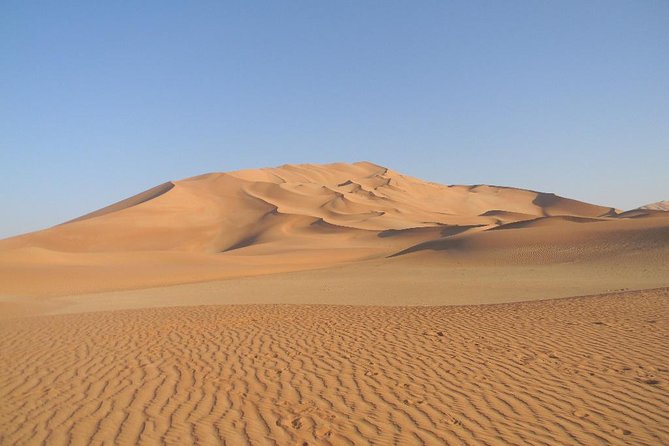
REVIEW · EMPTY QUARTER & RUB AL KHALI SAFARIS
Desert Safari in the Rub al Khali
Rub al Khali is pure otherworld. This safari day from Salalah strings together the Frankincense Trail and the ruins of Ubar, then pushes into the Rub al Khali dunes with expert sand drivers and guides who clearly care about getting it right.
What I like most is the mix of places and people, not just scenery. First, the UNESCO frankincense setting is meaningful and surprisingly scenic, with real Boswellia trees and the story behind the resin. Second, the experience is run as a private group for up to four, so you get smoother timing and more back-and-forth with the team.
The main drawback to plan for is simple, a long remote day in desert conditions. Expect dust, strong sun, and a bumpy drive at times, so it helps to dress for comfort and keep water and layers in mind.
In This Review
- Key highlights you will notice right away
- Morning Pickup and the Route South Out of Salalah
- Frankincense Trail in the Incense Valley, UNESCO and Real Trees
- Ubar Ruins, Why This Desert Has Stories
- Driving Into the Rub al Khali With Sand Experts
- Desert Camp Evening: Cozy Setups, Fire Chats, and Star Time
- Your Guides Matter: Alice, Geraldina, and Bukhit
- Price for Up to 4 People, What You Are Really Paying For
- What to Pack and How to Plan Your Desert Day
- Who Should Book This Rub al Khali Safari From Salalah
- Should You Book This Rub al Khali Desert Safari?
- FAQ
- What is the duration of the Desert Safari in the Rub al Khali?
- What time does the tour start in Salalah?
- How much does the tour cost?
- Is this tour private?
- Is pickup included?
- Do I need to buy an admission ticket for the Frankincense Trail stop?
- Will I receive a ticket on my phone?
- Is there free cancellation?
- Are service animals allowed?
Key highlights you will notice right away
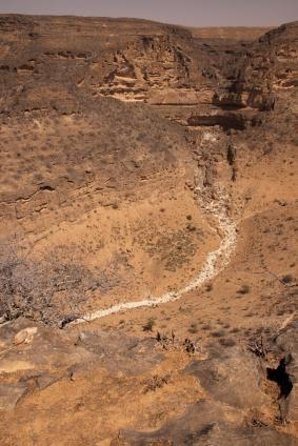
- Frankincense Trail, UNESCO Boswellia Sacra area with admission ticket free and a quick 15-minute stop
- Ubar ruins as the bridge between legend and desert geography
- Expert sand drivers who know how to handle dunes without turning your day into a jolting mess
- Private setup for up to four so you are not stuck waiting on a large crowd
- Camp time at night with fireside conversation, stargazing, and singing, when the program includes it
- Food that can work for you, including vegetarian meals prepared on request
Further into the Empty Quarter
- Sunset Desert Safari Salalah Tour in Rub Al Khali – Empty Quarter★ 5.0 · 91 reviews
- Salalah: Sunset Desert Safari – Rub Al Khali – Empty Quarter★ 4.6 · 79 reviews
- Empty Quarter Desert Sunset tour★ 5.0 · 55 reviews
- Desert Safari, Sunset & Sand Bashing (Rub Al Khali Desert)★ 5.0 · 44 reviews
Morning Pickup and the Route South Out of Salalah
This is an early, full-day kind of plan. The start time is 8:30 am and the total day runs about 8 hours. Pickup is offered, which matters here because getting to the right desert entry points on your own can eat up time and energy.
What makes this part of the day work is the pacing. You are not just rushing from one dune viewpoint to another. You begin with a cultural stop that gives context for why this region mattered, then you gradually shift into pure desert travel.
If you are wondering whether it will feel rushed, the answer is usually yes, it is a short day stretched across big geography. But the value is in how the stops are sequenced: frankincense first, Ubar next, then dunes. That order keeps the story moving.
Frankincense Trail in the Incense Valley, UNESCO and Real Trees
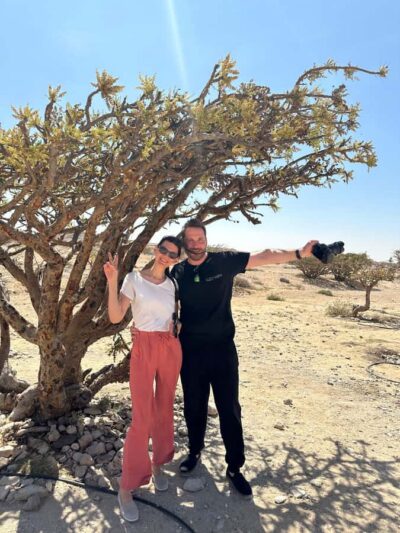
The first stop is the Frankincense Trail at the incense valley, and it is a UNESCO site. You get 15 minutes, and the admission ticket is free. This is short, but it is also focused, because the point is not a long museum visit. It is the setting and the plants.
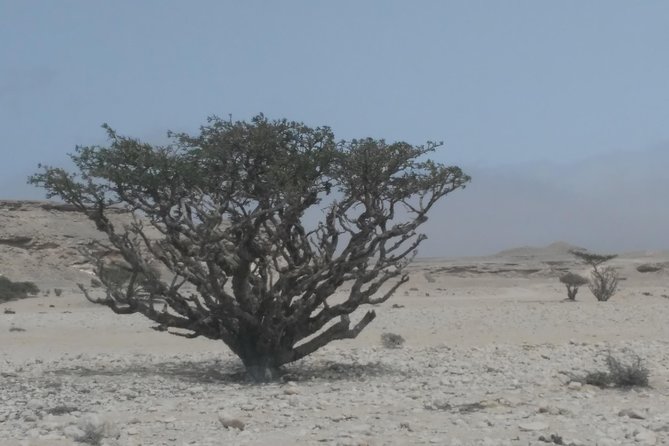
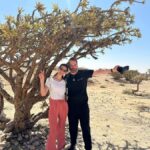
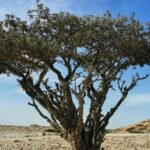
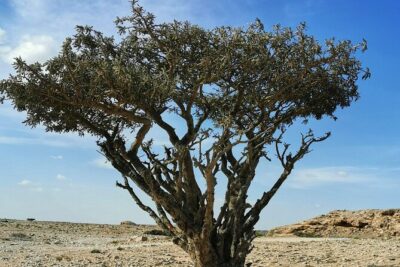
The incense valley is home to a major concentration of Boswellia sacra trees. The frankincense resin comes from these trees, and that simple fact changes how you see everything afterward. Instead of treating the desert as just sand, you start connecting the landscape to the trade that shaped the region.
Practical note: the trail stop is brief, so go in with a quick strategy. Look for the trees, listen to the guide’s explanation, and take photos fast if the light is strong. After this, you will be moving, and later the focus shifts from nature to vehicle tracks and dunes.
Ubar Ruins, Why This Desert Has Stories
After the incense stop, the day moves on to the ruins of the ancient city of Ubar. This is one of those locations that makes the desert feel layered, not empty. You are driving through a world that has preserved both physical remains and a lot of imagination.
What I like about including Ubar is that it sets up the Rub al Khali dunes as more than a dramatic backdrop. The desert is where trade routes changed, where settlements rose, and where geography could swallow paths and buildings. Even if you only catch the basics, it gives your later dune ride a deeper meaning.
The tradeoff is time. This is not a slow archaeological tour. It is a “see it, understand it, move on” stop. If you love deep ruins with lots of walking, you might wish you had a longer visit. If you like big-picture context inside a half-day style schedule, this fits well.
Driving Into the Rub al Khali With Sand Experts
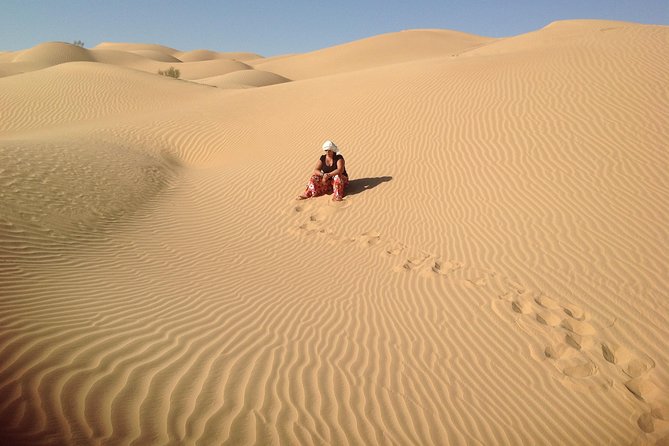
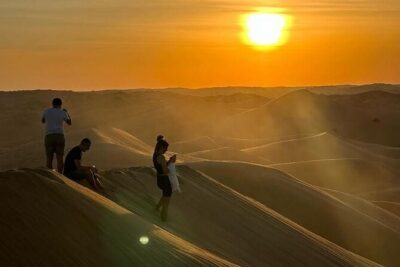
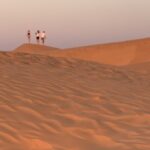
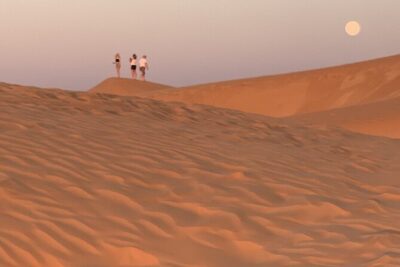
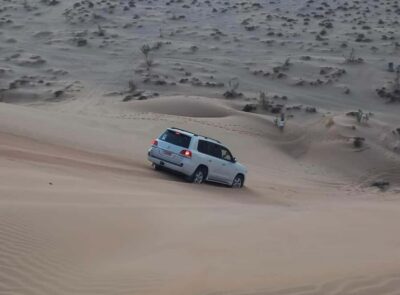
Then comes the part most people came for: the Rub al Khali dunes. This is described as the largest and still unexplored sandy desert in the world, and the day is arranged to respect that scale. You are accompanied by expert sand drivers and careful guides.
Here is what you should expect from a real sand-driving team. Dune travel is not like road travel. The vehicle handling depends on timing, angles, and momentum, and it helps when the driver is comfortable with the terrain instead of guessing. The “careful” piece matters because a desert safari can go wrong fast if someone pushes too hard.
I also appreciate that guides do this job with passion. That usually translates into two things you can feel during the drive. You get better explanations of what you are seeing, and you are less likely to get rushed past the best moments.
Tip for your comfort: wear something that can handle dust and sun. Sunglasses help, and so does a scarf or light layer you can adjust during stops. If you get motion sensitive, plan for bumpy patches, even with expert driving.
Other 4WD days across Salalah

Desert Camp Evening: Cozy Setups, Fire Chats, and Star Time
Some versions of this day include time at a desert camp, and the vibe described by past guests is very consistent. The camp setup is reported as clean and cozy, with hosts who make you feel settled rather than treated like a quick stop.
Evening activities are where this experience tends to feel special. People describe fireside chats, stargazing, and singing. That is not just entertainment. It is how a desert safari turns into a memory you talk about later, not a checklist of sites.
Food can also be part of the win. One vegetarian meal described was prepared and served as part of the camp experience. If you have dietary needs, this is a good moment to communicate them clearly when you book, so the team can plan accordingly.
The best way to enjoy camp time is to slow down mentally. Put your phone away for a bit. The night sky matters here, and the warmth of the fire makes it easier to actually stay present.
Your Guides Matter: Alice, Geraldina, and Bukhit
One of the strongest impressions from this safari is how much the guides shape the day. Named hosts in guest feedback include Alice and Geraldina, and a local Bedouin guide, Bukhit.
What you can take from that is simple: you are not dealing with generic talking points. You are more likely to get stories that match what you are seeing, plus practical desert know-how. That matters in places where conditions can shift quickly, and it helps keep the day smooth.
It is also a good sign for the tone of the experience. Reviews describe the team as warm and welcoming, with hosts who share stories and make time for conversation. In a long desert day, that kind of energy can change everything.
Price for Up to 4 People, What You Are Really Paying For
The price is listed as $512.83 per group, for up to four people. That can sound like a lot until you translate it into what a small group private day means in practice.
You are paying for:
- a private format (only your group participates)
- expert sand driving
- guide time through multiple key stops
- pickup support
- a full-day schedule that would be harder to stitch together yourself in the Rub al Khali
If you are traveling as a duo or small family, the per-person cost can become very reasonable compared with piecing together transportation and guides separately. If you are solo, it is still workable, but you should check whether the price makes sense for you versus joining other group tours in Oman.
My practical advice: treat this as a “quality and comfort day” rather than a bargain ride. When the desert is big, logistics matter. Private driving and competent guiding are often what keep the day enjoyable.
What to Pack and How to Plan Your Desert Day
You are going into hot sun, dust, and uneven terrain. Even if the day is well managed, you still have to show up prepared.
Bring:
- a light layer for sun and breeze
- sunglasses and sunscreen
- something to cover your face in dusty moments
- water and a small snack if you know you get hungry
- closed-toe shoes that grip on loose surfaces
For timing, remember the start is 8:30 am, and the day runs about 8 hours. Plan a relaxed day before and after. You will likely want time to shower and unwind after the desert.
Also, this is described as a private tour/activity, with only your group participating. That can mean less waiting, but it can also mean you should be ready when pickup time comes. Make sure you are reachable and have your confirmation details handy.
Who Should Book This Rub al Khali Safari From Salalah
This tour is a strong match if you want:
- cultural context plus desert driving (not just dunes)
- a small private group format
- expert handling of sand driving
- a team that can tailor at least some aspects like meal planning, including vegetarian options mentioned in feedback
It may feel like too much if you prefer a slow, minimal-effort sightseeing pace with lots of walking. This is more of a fast-moving “see key places, then enjoy the desert” style day.
It also suits people who like comfort and clarity. Pickup support and a mobile ticket help reduce friction, and the private nature helps you keep control of your time.
If you are sensitive to motion, plan for bumpy driving as a possibility, even with expert sand drivers. If you are comfortable with that, you will probably love the day.
Should You Book This Rub al Khali Desert Safari?
Book it if you want the Rub al Khali experience done with competent guides and a story-based route. The combo of frankincense valley context, Ubar ruins, and then expert dune travel is exactly the kind of itinerary that makes a desert day feel more complete.
Skip it or reconsider if you cannot handle remote conditions. This is not a short stroll, and the desert can be dusty and demanding. Also, if you are looking for lots of long stop time at each site, the day’s structure is built around movement and key moments, not extended wandering.
For most people, the deciding factor will be your group size and what you value most. If you want a private day with clean camp vibes, good hospitality from guides like Alice and Geraldina, and local insight from Bukhit, this one is a solid bet for Dhofar’s desert side.
FAQ
What is the duration of the Desert Safari in the Rub al Khali?
The tour duration is approximately 8 hours.
What time does the tour start in Salalah?
The start time is 8:30 am.
How much does the tour cost?
The price is $512.83 per group, up to 4 people.
Is this tour private?
Yes. It is a private tour/activity, and only your group will participate.
Is pickup included?
Pickup is offered.
Do I need to buy an admission ticket for the Frankincense Trail stop?
The admission ticket for the Frankincense Trail stop is free.
Will I receive a ticket on my phone?
Yes. A mobile ticket is provided.
Is there free cancellation?
Free cancellation is available. You can cancel up to 24 hours in advance for a full refund.
Are service animals allowed?
Yes, service animals are allowed, and most travelers can participate.
4WD Days Across Salalah
Out on the Empty Quarter
Elsewhere in Salalah, also reviewed
- Half-Day Private Salalah East Tour
★ 5.0 · 3 reviews - Salalah City Tour :Salalah Tours
★ 5.0 · 3 reviews - Salalah East Tour (Full Day Tour)
★ 5.0 · 3 reviews - West Coast Mountains and Beaches (Fazayah beach + Shaat cliff)
★ 5.0 · 3 reviews - Jebel Safari – Tour della montagna
★ 5.0 · 3 reviews
Empty Quarter & Rub Al Khali Safaris, compared.
 ★ 5.0Sunset Desert Safari Salalah Tour in Rub Al Khali – Empty QuarterFrom $9591 reviews
 ★ 4.6Salalah: Sunset Desert Safari – Rub Al Khali – Empty QuarterFrom $10279 reviews
 ★ 5.0Empty Quarter Desert Sunset tourFrom $15255 reviews
 ★ 5.0Desert Safari, Sunset & Sand Bashing (Rub Al Khali Desert)From $16444 reviews
 ★ 5.0Magical Night Stay in Rub Al Khali Empty Quarter Desert SalalahFrom $27535 reviews
 ★ 5.0Desert Sunset Magic – Salalah Empty Quarter ExperienceFrom $20019 reviews
 ★ 5.0Desert Safari Trip Full Day & Ubar Lost cityFrom $19518 reviews
 ★ 4.8Magical Desert Safari By Land Cruise in Empty QuarterFrom $15218 reviews
Browse the lists this tour appears in